
Customs Dictionary
The opening of international trade access has made import activities increasingly unavoidable.
Improved transportation infrastructure and information technology have also made it easier for goods from overseas to continuously enter the domestic market and meet local demand.
Import activities are closely related to taxation.
In addition to import duties, importers are also subject to Taxes in the Framework of Importation (PDRI).
One of these taxes is Income Tax (PPh) Article 22 on Imports.
The provisions concerning PPh Article 22 on Imports are regulated under Minister of Finance Regulation No. 34/PMK.10/2017.
Under this regulation, the applicable PPh Article 22 import rate varies depending on:
- The category of goods
- Whether the importer has an Import Identification Number
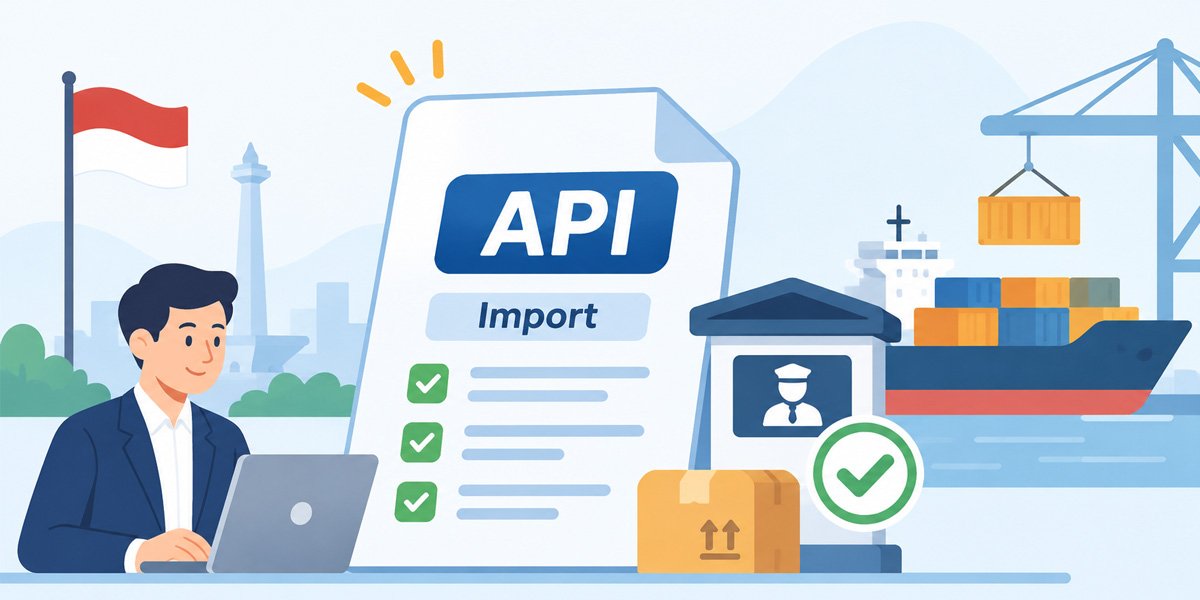
So, what exactly is an Import Identification Number (API)?
Definition of Import Identification Number (API)
Referring to Article 1 point 2 of Minister of Trade Regulation No. 75 of 2018, an Import Identification Number (Angka Pengenal Impor/API) is an identification number for an importer.
An importer can be:
- An individual
- A business entity with legal entity status
- A business entity without legal entity status
that conducts import activities.
Import activities may only be carried out by importers that have an API.
There are two types of API:
- General Import Identification Number (API-U)
- Producer Import Identification Number (API-P)
API-U: General Import Identification Number
API-U is an Import Identification Number granted to companies that import certain goods for the purpose of trading or resale.
In other words, businesses using API-U generally import products that will later be sold to other parties.
API-P: Producer Import Identification Number
API-P is granted to companies that import goods exclusively for their own use.
These goods may include:
- Capital goods
- Raw materials
- Supporting materials
- Materials required to support production activities
Therefore, goods imported by an API-P holder are generally prohibited from being traded or transferred to another party.
However, there is an exception.
If the imported goods receive an import duty exemption facility and have been used by the importer for at least 2 years from the date of the import customs declaration, the goods may then be transferred to another party.
An Importer Can Only Have One Type of API
Each importer may only have one type of API.
This means that an importer cannot simultaneously hold both:
- API-U
- API-P
The API applies to import activities throughout Indonesia.
It remains valid as long as the importer continues to operate its business.
API Before the Implementation of OSS
Before the implementation of the Online Single Submission (OSS) system, both individuals and companies that planned to import goods into Indonesia were required to obtain either:
- API-U, or
- API-P
depending on the type and intended use of the imported products.
The API was therefore processed as a separate import-related business identification document.
API After the Implementation of OSS
The implementation of OSS beginning in 2018 changed the business licensing process.
Through OSS, registered business operators receive a Business Identification Number (Nomor Induk Berusaha/NIB).
Based on Article 9 of Minister of Trade Regulation No. 75 of 2018 and Article 176 paragraph (5) of Government Regulation No. 5 of 2021, the NIB also serves as an API.
This means that businesses no longer need to obtain API as a completely separate identification document in the same way as before the OSS implementation.
However, business operators that require API still need to select one of the two API functions:
- API-U, or
- API-P
As under the previous provisions, a business cannot simultaneously select both types.
API and PPh Article 22 on Imports
Ownership of an API is also relevant to taxation in import activities.
The applicable PPh Article 22 Import rate may vary depending on:
- The type of imported goods
- The tariff classification of the goods
- Whether the importer has an API
Therefore, understanding the API function is important not only from a business licensing perspective but also for tax and customs administration.
Conclusion
In summary, an Import Identification Number (Angka Pengenal Impor/API) is an identification number used by importers conducting import activities.
There are two types of API.
1. API-U
General Import Identification Number (API-U) is used for importing goods intended for trading or resale.
2. API-P
Producer Import Identification Number (API-P) is used for importing goods for the importer’s own production activities, including:
- Capital goods
- Raw materials
- Supporting materials
- Other materials required for production
Following the implementation of OSS, the Business Identification Number (NIB) also functions as an API.
However, businesses requiring an API function must still choose between API-U or API-P according to the purpose of their import activities.