

One example of the development of telecommunications is the transition of television broadcasting technology from analog to digital TV, where the transmission process to the end user is carried out digitally.
The migration from analog to digital is one of the efforts of the Ministry of Communication and Informatics (KOMINFO) to support the optimization of cellular telecommunication services.
As a result, there are many digital products that support digital broadcasting, including digital TVs and supporting devices such as DVB (Digital Video Broadcasting).
To allow the public to enjoy television broadcasts and use cable-based technological equipment and devices, the government establishes technical standards for the equipment and/or devices.
Do you already know about these requirements?
What is DVB, and what should importers and distributors pay attention to when registering their products so that they can be used in Indonesia?
The following is a summary we have prepared.
Digital & Analog TV and the Need for DVB in Indonesia
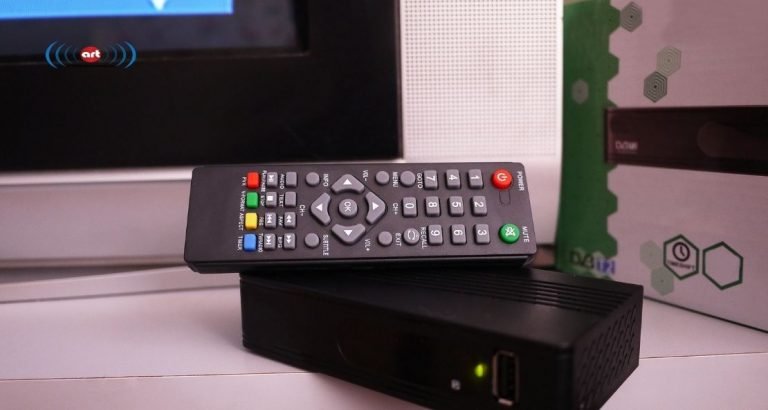
Along with the growing need for digital technology, analog TVs can still be used with the help of a Set Top Box (STB).
An STB is one type of DVB (Digital Video Broadcasting) device.
DVB is a consortium that develops systems used to transmit digital television broadcasts.
By using DVB, analog TVs can receive more digital channels.
In addition to increased channel capacity, cable-based DVB systems such as DVB-C also offer two-way interaction services.
DVB has developed several standards, including:
- Satellite (DVB-S)
- Cable (DVB-C)
- Terrestrial radio waves (DVB-T)
The DVB-S standard was the first DVB product that allowed DVB signals to be transmitted through satellites.
This standard describes various tools used for channel coding, including the implementation of Binary Phase Shift Keying (BPSK) modulation.
Meanwhile, the DVB-C standard describes the DVB channel coding and modulation system.
This document also became one of the foundations for developing DVB-S specifications, including Satellite Master Antenna Television (SMATV).
The use of terrestrial transmission media is covered under the DVB-T specification.
This specification uses microwaves to transmit SDB signals through MMDS (Multichannel Microwave Distribution System), which is divided into two specifications:
- Frequencies above 10 GHz (DVB-MS) using the SDB-S specification
- Frequencies below 10 GHz (DVB-MC) using the DVB-C specification
Meanwhile, DVB-T2 is a development of DVB-T and is therefore referred to as the second generation, or T2.
This system transmits digitally compressed audio, video, and other data through a Physical Layer Pipe (PLP).
Digital TV (DTV) offers many advantages and greater efficiency compared with Analog TV (ATV).
Analog television is limited to receiving analog UHF antenna signals.
Analog signals have several disadvantages, including being more vulnerable to interference, distortion, and noise.
Analog signals are also less efficient because one television station can only occupy one frequency.
With digital signals, however, one frequency can be used for up to 6–12 channels.
By using digital signal modulation and compression systems, digital TV offers advantages such as clearer picture quality, clearer sound, and various additional technologies.
Some of these features include:
- Early warning systems for natural disasters
- Parental lock features
- Electronic Program Guide
Technical Requirements for Television and Radio Broadcasting
The development of television and radio broadcasting has increased the number of equipment and devices entering Indonesia.
These products are among the devices that require SDPPI/Postel certification.
The Ministry of Communication and Informatics establishes technical standards for television and radio broadcasting under Minister of Communication and Informatics Regulation (PM Kominfo) No. 4 of 2019.
This regulation covers television broadcasting equipment consisting of:
1. Terrestrial Digital Television Broadcasting
This includes:
- Digital television broadcasting transmitters based on Digital Video Broadcasting Terrestrial Second Generation (DVB-T2)
- DVB-T2 digital television receivers consisting of:
- Television sets
- Set Top Boxes
2. Cable-Based Television Broadcasting
This includes:
- Cable television modulators
- Cable television Set Top Boxes
3. Satellite-Based Television Broadcasting
This includes:
- Digital satellite encoders
- Digital satellite Set Top Boxes
4. Other Television Broadcasting Equipment
This includes:
- Internet Protocol Set Top Boxes
- Integrated Receiver/Decoders
- Internet Protocol Television encoders
- Triple-play television technology consisting of:
- Cable Modem Termination System
- Cable Modem
- Hybrid Case Set Top Box
- Hybrid Fiber Coax Trunk Amplifier
For radio broadcasting, this regulation covers:
1. Terrestrial-Based Radio Broadcasting
This includes:
- Analog radio broadcasting equipment
- Digital Audio Broadcasting+ (DAB+) equipment
2. Studio Transmission Link (STL)
What Technical Standards Must Be Met?
The following are several technical requirements that can help you understand the Technical Standards for television broadcasting.
1. General Requirements
- EMC Requirements
- Non-Ionizing Radiation Requirements
- Electrical Safety Requirements
2. System Configuration
- Terrestrial Digital Television Broadcasting
- Cable-Based Television Broadcasting
- Satellite-Based Television Broadcasting
- Other Television Broadcasting Systems
3. Technical Specifications
For Radio Broadcasting, the following requirements apply:
1. General Requirements
- EMC Requirements
- Electromagnetic Radiation Requirements
- Electrical Safety Requirements
2. Technical Specifications
- Analog Radio Broadcasting Equipment
- Digital Audio Broadcasting+ (DAB+) Equipment
The explanation above provides a brief introduction to Digital Video Broadcasting (DVB) and the Technical Standards for Television and Radio Broadcasting.
We hope this information helps you begin to understand the SDPPI/Postel certification process.