
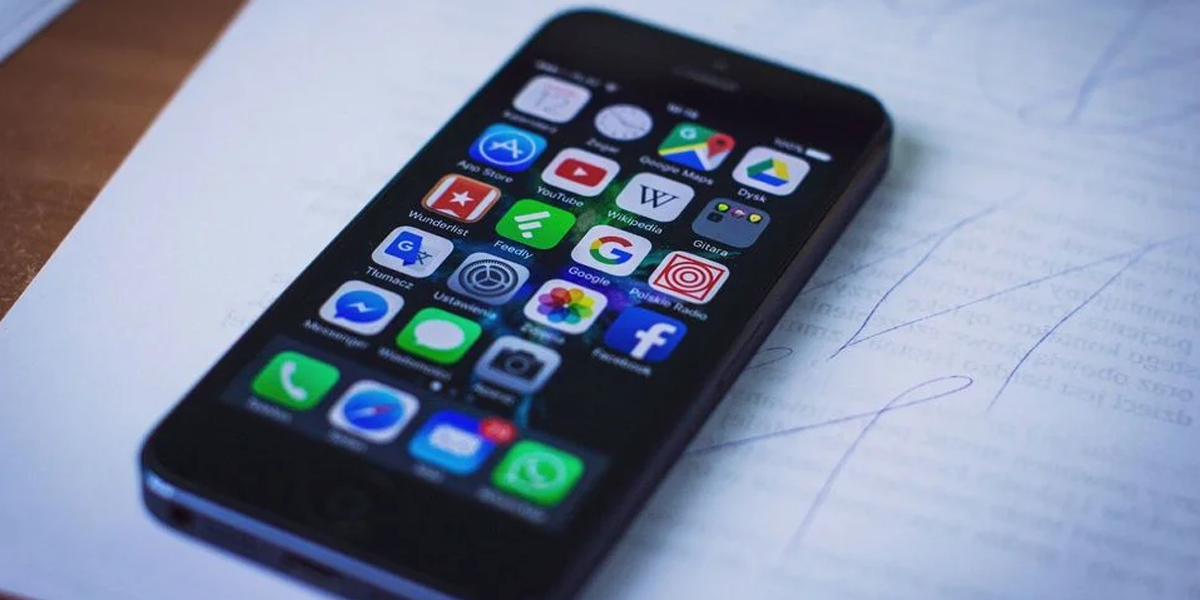
Mobile phones are one of the telecommunication devices that almost everyone owns today.
Various brands and types of mobile phones offer different advantages, including features, warranty, and product safety.
Mobile phones are required to meet certain standards so that they can function properly.
However, did you know that these standards are regulated under regulations established by the government?
Because of these standards, every importer or manufacturer is required to obtain SDPPI/Postel certification for mobile phone equipment and/or devices.
The certification process is intended to ensure that devices function properly and to help protect consumers.
So, what should you know about SDPPI certification for mobile phones?
Let’s take a look at the following article.
A mobile phone, also known as a cellular phone or Handphone (HP), is an electronic telecommunication device that can be carried anywhere and does not require cables to connect to a network.
Originally designed to make and receive phone calls, mobile phones have now become multifunctional devices.
As technology has developed, mobile phones are now equipped with various features, such as:
- Radio and television reception
- Audio and video player software
- Digital cameras
- Games
- Internet services such as WAP, GPRS, 3G, 4G, and 5G
In addition, mobile phones can also function as mini computers.
Development of Mobile Phones
Mobile phones have gone through several stages of development.
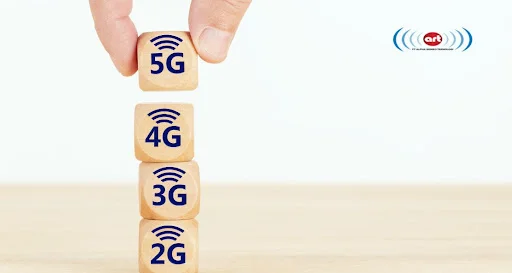
These development stages are commonly known by the term “G,” which stands for generation.
The following is an overview of the development of mobile phone generations.
Generation 0
The development of mobile phones has always been closely related to the development of radio technology.
It began with one-way radio communication, which later developed into two-way communication commonly known as Frequency Modulated (FM) communication.
In 1940, a company developed a portable Handie-Talkie, a communication device used on the battlefield during World War II.
This period became known as Generation 0 or 0G, when mobile communication devices were first introduced.
Generation I
The first generation, also known as 1G, was the first true generation of mobile phones.
The technology used by 1G was still analog and was known as AMPS.
AMPS used frequencies between 825 MHz and 894 MHz and operated in the 800 MHz band.
However, first-generation mobile phones still had limitations in terms of user mobility.
During a phone call, the user’s mobility was limited by the coverage area of the mobile network.
Generation II
The second generation, or 2G, appeared around the 1990s and used technologies such as GSM and CDMA.
This generation replaced analog signals with digital signals.
Devices also became smaller and lighter because they used digital chip technology.
In addition to the improvements in size, 2G used lower radio signal levels, which reduced the effects of radiation that could be harmful to users.
Generation III
The third generation, commonly known as 3G, allowed users to access wider network coverage and offered internet access as well as advanced video call features.
This generation had three standards, including:
- Enhanced Data Rates for GSM Evolution (EDGE)
- Wideband-CDMA
- CDMA 2000
This generation also began introducing operating systems into mobile phones.
These devices became known as smartphones because their functions became increasingly similar to computers.
Generation IV
The fourth generation, or Fourth Generation (4G), is a mobile communication system that offers a new approach by integrating existing wireless technologies.
These technologies include:
- Wireless Broadband (WiBro)
- 802.16e
- CDMA
- Wireless LAN
- Bluetooth
- Other wireless technologies
4G provides users with high speed, high data capacity, good voice quality, global coverage, and flexibility to access different technologies.
In addition, 4G provides high-speed data services to support various multimedia applications, such as:
- Video conferencing
- Online gaming
- Other multimedia applications
Generation V
The fifth generation, or Fifth Generation (5G), is a cellular telecommunication standard that exceeds the capabilities of 4G.
It began developing toward the end of 2021 and continues to develop around the world, including in Indonesia.
This technology is expected to support the 5G IoT (Internet of Things) ecosystem, where networks can support the communication needs of billions of connected devices while maintaining the right balance between speed, latency, and cost.
Future 5G development will also focus on IoT and critical communication applications.
As a result, many 5G devices will become available and widely used by the public.
SDPPI/Postel Certification for Mobile Phones
The use of mobile phones will continue to develop.
In Indonesia, several generations of cellular technology are still available and used by the public, ranging from 2G to the developing 5G technology.
Every cellular device is required to comply with the technical standards for telecommunication devices established by the Directorate General of SDPPI.
These requirements are regulated under:
- Director General of SDPPI Regulation No. 5 of 2019 for 2G and 3G
- Minister of Communication and Informatics Regulation No. 13 of 2021 for 4G and 5G
These regulations contain technical standards that importers and distributors must comply with when marketing their products in Indonesia.
One of the requirements concerns frequency allocation.
The applicable frequency allocations include:
- GSM/2G: 900 MHz & 1800 MHz
- WCDMA/UMTS/3G: 900 MHz & 2100 MHz (Band I & VIII)
- LTE/4G: 800 MHz, 900 MHz, 1800 MHz, 2100 MHz, 2300 MHz & 450 MHz (Band 1/3/5/8/40/450)
- 5G: 800 MHz, 900 MHz, 1800 MHz, 2100 MHz & 2300 MHz (n1/n3/n5/n8/n40)
The information above provides a brief overview of SDPPI certification for mobile phones.
We hope this article helps you understand the importance of obtaining Postel certification so that devices can function properly and consumers can receive appropriate protection.
Interested in obtaining SDPPI/Postel certification for cellular devices?
Contact us today for more information.