
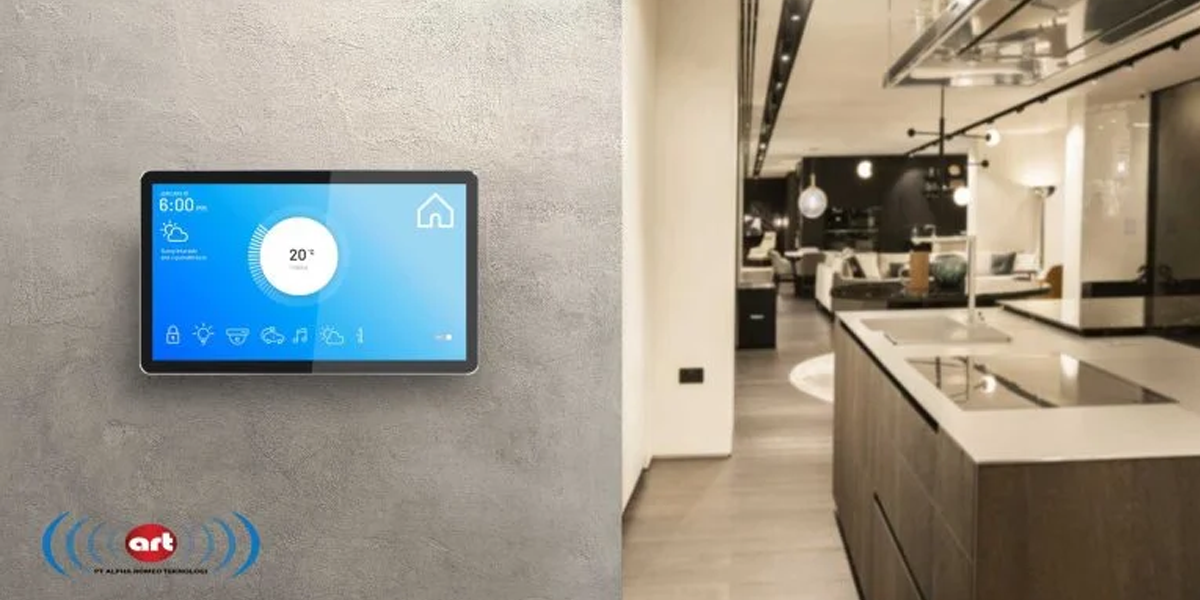
SDPPI/Postel Certification for Smart Home Devices
Smart Home technology began entering and being introduced in Indonesia around the 2000s.
However, this technology has only recently started becoming more popular among the public.
This development is closely related to increasing mobility and higher levels of work activity.
With these needs, people require technology that can make activities at home easier, safer, more efficient, and more comfortable.
This allows them to focus more on their work and other activities.
Smart Home technology is designed to provide these benefits.
However, did you know that devices used in Smart Home systems are required to obtain SDPPI certification?
Want to learn more?
Let’s take a look at the following article.
SDPPI Smart Home Certification

What Is a Smart Home?
A Smart Home, or smart house, is a modern home concept that uses communication technology and the Internet of Things (IoT) to improve convenience, security, and comfort for its occupants.
A Smart Home allows users to remotely control:
- Home security
- Energy efficiency
- Activities of connected devices
- Various household functions
Therefore, Smart Home technology can be very useful for people who often work until late in the evening or frequently travel out of town for business.
By applying Smart Home technology at home, users do not need to worry about tasks such as:
- Turning on lights at night
- Checking household equipment before leaving
- Making sure doors are properly locked
- Monitoring various devices at home
All of these functions can be controlled from one device and from a distance through a smartphone.
Smart Home and Smart Home Systems
Many people may ask:
“How can Smart Home technology be applied in our homes? Do we need to install an entire home automation system?”
There is no need to install every Smart Home function at once.
Smart Home technology can be applied according to individual needs.
For example, users can install a Smart Home system that automatically turns on the lights at night without installing an automatic door locking system.
The same principle can also be applied in reverse.
The following are several examples of Smart Home systems that are commonly used.
1. Automating Electronic Devices Based on the Occupant’s Routine
One brand that provides this type of system is Yonomi.
Yonomi is a Smart Home System in the form of an application that can connect to different devices and allow users to configure home controls and automation according to their preferences.
Yonomi can help homeowners automate their daily routines.
The Yonomi application functions as the brain of the Smart Home system and can be controlled through a smartphone or other smart device.
The application can connect to electronic devices in the home, such as:
- Smart speakers
- Lighting
- Thermostats
Yonomi can help automatically turn these devices on and off according to the homeowner’s routine.
2. Home Security System
This type of system can be useful for homeowners who frequently travel out of town for work or leisure.
One brand that provides this type of system is Ring through its Ring Alarm product.
Ring Alarm provides features such as:
- Numeric keypad
- Base station with siren
- Motion sensors
- Door sensors
- Window sensors
Ring Alarm can help record activities occurring inside and around the home using its sensors.
If suspicious activity is detected, the system can send a notification to the user.
Recorded activity can then be stored in cloud storage with unlimited capacity.
3. Automatic Home Temperature Control
Changes in temperature can often occur, especially during transitional seasons.
For example, the temperature may feel hot when going to sleep but become much colder during the early morning hours.
Continuous exposure to significant temperature changes may affect the comfort and health of home occupants.
This situation can be anticipated using a Smart Home system such as the Ecobee SmartThermostat.
This thermostat operates through Wi-Fi and allows occupants to control the indoor temperature using an application or voice commands.
In addition, the thermostat can detect and adjust the temperature of the room around the area where the device is installed.
4. Controlling the Home According to the Occupant’s Lifestyle
For busy homeowners with many activities who need assistance in managing household tasks, this type of Smart Home system can be a solution.
Samsung SmartThings Hub is one example of a Smart Home System designed to synchronize the home with the lifestyle of its occupants.
The system can assist with both household and daily activities.
It operates using a multifunction remote-control concept through a single application.
The system can control devices such as:
- Television
- Vacuum cleaner
- Air conditioner
- Other connected electronic devices
These functions can be used as long as the electronic devices are connected to the internet and registered with a Samsung Account.
In addition to the four systems above, there are many other Smart Home systems that can be applied in a home.
In general, the basic principle of a Smart Home system is to connect household electronic devices to the internet and integrate them with a control system.
One of the most commonly used control systems is an application installed on a smartphone.
SDPPI Certification for Smart Home System Devices
After understanding how Smart Home systems work, we can see that electronic devices installed in the system are connected to the internet and to a control system to exchange data and information.
As the functions of these devices continue to develop, devices used in Smart Home systems can be categorized as telecommunication products.
Therefore, these devices are required to obtain SDPPI certification from the Ministry of Communication and Informatics.
Technologies commonly used in Smart Home System products include:
- Bluetooth
- Internet connectivity
Devices using one or both of these technologies are required to obtain SDPPI certification.
The purpose is to help ensure that device interoperability can operate properly.
Several Smart Home devices that may require SDPPI certification include:
- Smart lights
- Smart active speakers
- Home sensors
- Automatic thermostats
- Other connected Smart Home devices
The number and types of devices requiring SDPPI certification will continue to develop as technological innovation continues.
This may create uncertainty for Smart Home System manufacturers regarding which devices require SDPPI certification and which devices do not.
For this reason, PT. Alpha Romeo Teknologi can assist as a consultation partner in determining which products require SDPPI certification and which products do not.
We can also assist with the SDPPI certification process for Smart Home devices.
Alpha Romeo Teknologi is an SDPPI/Postel certification service provider that can assist you in obtaining SDPPI certification.
We have more than 10 years of experience assisting with the issuance of SDPPI certificates and are committed to providing the best lead time, with a target processing time of 3 weeks.
Ready to obtain an SDPPI certificate?