

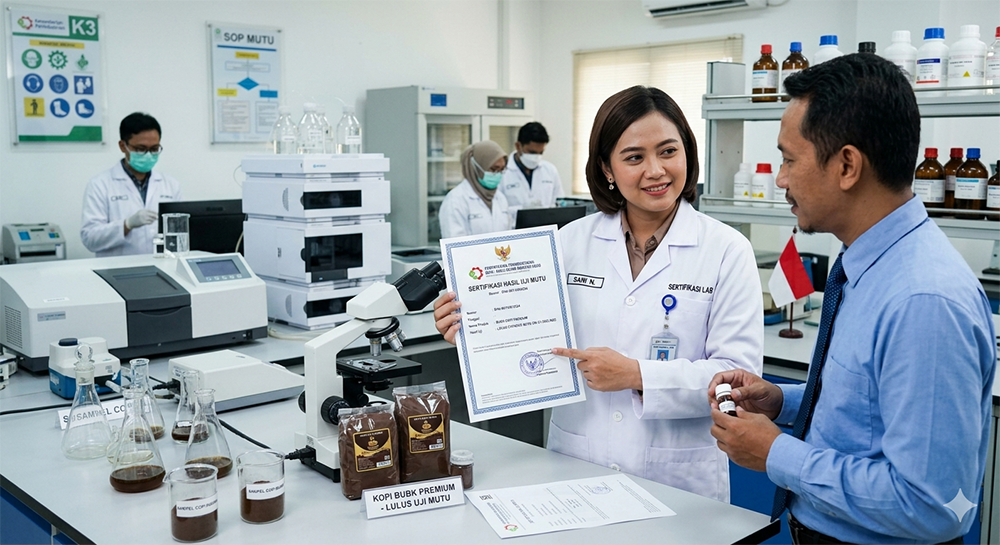
In modern trade and industry, product quality and safety play an important role for both businesses and consumers. Therefore, companies often use laboratory testing to check the quality and characteristics of their products.
Laboratories can provide the test results in a Laboratory Test Report, Test Certificate, or Certificate of Analysis (CoA). The type of document depends on the product, laboratory, testing requirements, and purpose of the test.
These documents provide objective information about specific parameters of a product sample. For example, laboratories may examine its physical, chemical, microbiological, or mechanical characteristics.
1. What Is Product Quality Test Certification?
Product Quality Test Certification is a general term for documents that laboratories provide after testing a product.
In practice, a laboratory may provide a Laboratory Test Report, Test Certificate, or Certificate of Analysis (CoA).
The document shows which parameters the laboratory tested and the results of those tests. Depending on the product, the laboratory may examine:
- Physical parameters
- Chemical parameters
- Microbiological parameters
- Mechanical parameters
- Other parameters based on the product characteristics and applicable standards
First, the laboratory tests a product sample using a specific testing method. Next, the company or relevant authority can compare the results with applicable standards, technical specifications, or regulatory requirements.
As a result, the test results can help determine whether the tested parameters meet the required criteria.
2. Why Is Product Quality Testing Important?
Product quality testing provides several important benefits for manufacturers, importers, exporters, and other businesses.
Checking Product Quality
First, laboratory testing helps companies check whether specific product parameters meet the required standards or technical specifications.
In addition, testing can help companies identify quality issues before they distribute or sell their products.
Supporting Consumer Protection
Laboratory testing can also help companies identify substances or conditions that may affect product safety.
For example, depending on the type of product, a laboratory may test for:
- Heavy metals
- Microbiological contamination
- Chemical substances
- Other safety-related parameters
However, the required parameters depend on the type of product and the applicable regulations or standards.
Supporting Certification and Licensing
Laboratory test results can also support certain certification or licensing processes.
However, each product and certification scheme may have different requirements. Therefore, companies should check the applicable requirements before conducting laboratory testing.
This step can help companies select the correct parameters and avoid unnecessary tests.
Supporting Export and Import Activities
For certain products, a Laboratory Test Report or Certificate of Analysis (CoA) may be required as part of export or import procedures.
The required documents and testing parameters may depend on the type of product, destination country, country of origin, and requirements of the relevant authorities.
Supporting Company Quality Control
Companies can also use laboratory test results as part of their internal Quality Control (QC) process.
Regular testing can help companies monitor product consistency and compare the quality of products from one production batch to another.
3. What Are Laboratory Test Reports and Certificates Used For?
Laboratory test reports and certificates can be used for many purposes, including:
- Supporting product certification
- Supporting certain licensing applications
- Supporting export and import requirements for certain products
- Internal Quality Control (QC)
- Product specification verification
- Procurement requirements
- Customer or business partner requirements
- Demonstrating compliance with certain standards or specifications
The use of a laboratory test result should always match the purpose of the test and the applicable requirements.
4. How Long Is a Product Test Certificate Valid?
There is no single validity period that applies to all laboratory test reports or certificates.
The acceptance or validity of a test result may depend on several factors, including:
- Type of product
- Batch or lot number
- Tested parameters
- Testing method
- Purpose of the test result
- Regulatory requirements
- Certification body requirements
- Customer requirements
- Export destination requirements
For some products, a test result may only apply to a specific production batch or lot.
For certain certification or licensing processes, the relevant authority or certification body may also set specific requirements regarding how recent a laboratory test result must be.
Companies should therefore confirm the applicable requirements before using an existing laboratory test report for certification, licensing, export, import, or other purposes.
5. Regulations and Standards for Product Testing in Indonesia
Standardization and conformity assessment activities in Indonesia are regulated, among others, under Law No. 20 of 2014 concerning Standardization and Conformity Assessment.
Laboratory testing is one of the activities used to determine the characteristics of a material, product, process, or other object based on specific standards or testing methods.
In Indonesia, laboratory accreditation is conducted through the National Accreditation Committee (Komite Akreditasi Nasional/KAN).
Testing laboratories may be accredited based on SNI ISO/IEC 17025, which sets the general requirements for the competence of testing and calibration laboratories.
However, laboratory requirements, testing parameters, testing methods, and applicable standards may vary depending on the type of product and the relevant regulations.
Companies should make sure that the selected laboratory has the appropriate testing scope for the product and parameters being tested.
6. Documents Commonly Required for Product Quality Testing
The required documents may vary depending on the laboratory, type of product, and purpose of the test.
In general, applicants may need to prepare the following:
- Testing Application Form: Contains information about the applicant, product, and requested testing parameters
- Company Documents: Such as the Business Identification Number (NIB) and other company documents when required
- Product Technical Specifications: Information about the characteristics and specifications of the product
- Safety Data Sheet (SDS): May be required for certain materials, chemicals, or products
- Batch or Lot Information: Especially when the test result is related to a specific production batch
- Product Samples: Samples must be provided in the quantity and condition required by the laboratory
The quantity, packaging, handling, and condition of the samples should follow the laboratory’s instructions.
Proper sample preparation is important to ensure that the samples are suitable for testing and represent the product being evaluated.
7. Product Quality Testing Process
The laboratory testing process generally includes the following steps.
Step 1: Determine the Testing Parameters
The company first needs to determine which parameters should be tested.
These parameters may be based on:
- Product type
- Applicable standards
- Regulatory requirements
- Certification requirements
- Customer requirements
- Internal company requirements
Identifying the correct testing parameters from the beginning can help avoid unnecessary testing and additional costs.
Step 2: Choose the Right Testing Laboratory
Choose a laboratory that has the competence and testing scope required for the product and parameters being tested.
If the test results will be used for certification or regulatory purposes, companies should also make sure that the laboratory meets the requirements of the relevant authority or certification body.
Step 3: Submit the Application and Product Samples
The applicant submits the testing application together with the required product samples and supporting documents.
Applications may be submitted online or directly to the laboratory, depending on the laboratory’s service system.
Step 4: Application Review
The laboratory reviews the application, product samples, requested parameters, testing methods, and its ability to perform the required tests.
The laboratory may then provide information about the testing cost and estimated completion time.
Step 5: Laboratory Testing
The laboratory tests the samples using methods and equipment suitable for the requested parameters.
Testing methods may refer to standards such as:
- SNI
- ISO
- ASTM
- AOAC
- Other relevant testing standards or methods
The method used depends on the type of product, parameter, and purpose of the test.
Step 6: Issuance of the Test Result
After the testing and verification processes are completed, the laboratory issues the official test result.
Depending on the laboratory and the purpose of the test, the document may be issued as a:
- Laboratory Test Report
- Test Certificate
- Certificate of Analysis (CoA)
The document contains the results of the parameters tested on the submitted product sample.
Conclusion
Product quality testing is an important process for objectively evaluating the characteristics of a product based on specific testing parameters and methods.
Laboratory test results can be used for many purposes, including internal quality control, product certification, licensing, export and import activities, procurement, and compliance with certain standards.
Because every product may have different standards and regulatory requirements, companies should first determine the product type, required testing parameters, applicable standards, and purpose of the test before submitting samples to a laboratory.
Choosing a laboratory with the appropriate competence and testing scope is also important to ensure that the test results can be used for the company’s intended purpose.