
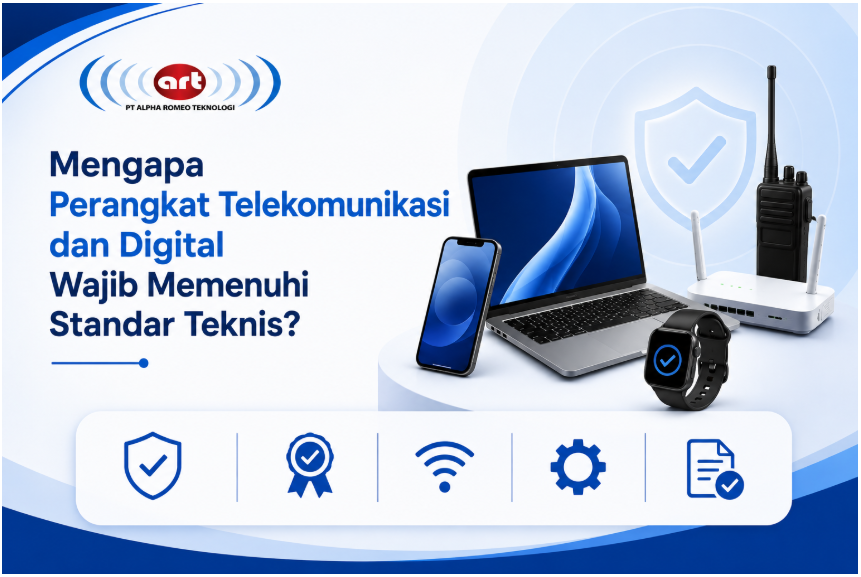
Smartphones, Wi-Fi routers, laptops, smartwatches, Internet of Things (IoT) devices, radio communication equipment, and many other telecommunication devices have become an important part of everyday life and business activities.
However, telecommunication equipment and/or devices that are manufactured, assembled, imported, traded, or used in Indonesia must meet the applicable technical standards.
Meeting these technical standards is an important part of obtaining a Telecommunication Equipment and/or Telecommunication Device Certificate from the Directorate General of Digital Infrastructure (DJID), which many companies still know as SDPPI or Postel Certification.
Technical standards are not simply administrative requirements for certification. Instead, they help ensure that devices meet applicable requirements related to safety, radio frequency use, interference prevention, network connectivity, and other technical aspects.
So, why are technical standards so important for telecommunication devices in Indonesia?
What Are Technical Standards for Telecommunication Devices?
Technical standards for telecommunication devices are technical requirements that telecommunication equipment and/or devices must meet before companies can trade or use them in Indonesia.
These standards may regulate different technical parameters depending on the device, technology, and function.
The requirements may cover:
- Radio Frequency (RF) parameters
- Transmission power limits
- Frequency bands
- Unwanted emissions
- Electromagnetic Compatibility (EMC)
- Specific Absorption Rate (SAR) for certain devices
- Electrical Safety for certain devices
- Network interface and connectivity parameters
- Other technical requirements based on the type of device
Not every device has the same testing requirements.
Therefore, companies need to identify the applicable technical requirements based on the device type, technology, function, and relevant regulations.
Devices demonstrate compliance with technical standards through testing.
Depending on the applicable rules, testing may take place at approved domestic or overseas testing laboratories.
If the test results show that the device meets the required technical standards, the company can use those results as part of the application for a Telecommunication Equipment and/or Telecommunication Device Certificate.
Why Are Technical Standards for Telecommunication Devices Important?
1. Helping Protect User Safety
One important purpose of technical standards is to help protect users from potential risks related to telecommunication equipment and devices.
Depending on the device and the applicable technical standard, testing may include requirements related to user safety.
For example, certain devices may need to meet requirements for:
- Electrical Safety
- Specific Absorption Rate (SAR)
- Radio frequency exposure limits
- Electrical parameters
- Other safety-related requirements
However, these tests do not apply to every device.
Each product has different technical requirements based on its technology, function, and applicable regulations.
Therefore, technical standards allow regulators and testing laboratories to evaluate devices using specific technical parameters before companies market or use them in Indonesia.
2. Ensuring Technical Performance Meets Requirements
Technical standards also help ensure that the technical parameters of a device remain within the required limits.
For example, testing may evaluate:
- Transmission power
- Operating frequency
- Bandwidth
- RF characteristics
- Device emissions
- Transmitter and receiver parameters
- Other technical parameters based on the technology
However, certification does not mean that the government guarantees that a device will always provide the fastest internet connection or the best signal quality.
Instead, certification shows that the required technical parameters have been evaluated against the applicable technical standards.
This process helps ensure that devices operate within the technical conditions required for Indonesia’s telecommunications environment.
3. Preventing Radio Interference
Telecommunication devices that use radio technology operate within regulated radio frequency spectrum.
If a device transmits signals outside the permitted technical limits, it may cause interference with other communication systems.
Interference may result in:
- Lower communication quality
- Problems with nearby devices
- Telecommunications network disruption
- Improper use of radio frequency spectrum
- Interference with certain communication services
Therefore, one important purpose of technical standards is to prevent telecommunication equipment and devices from interfering with one another.
RF, EMC, unwanted emission, and other relevant tests help confirm that a device operates within the permitted technical limits.
4. Supporting Connectivity in Telecommunication Networks
Telecommunication devices do not operate independently.
Smartphones, modems, routers, base stations, IoT devices, and many other products need to connect with specific networks and communication technologies.
Therefore, technical standards also support connectivity within telecommunication networks.
Technical requirements help ensure that devices use technologies, frequencies, and parameters that comply with applicable regulations.
As a result, devices can operate within Indonesia’s telecommunications ecosystem in a more controlled and compatible manner.
5. Providing Protection for the Public
Certification provides confirmation that telecommunication equipment and devices have gone through the required technical compliance process.
However, this does not mean that certification guarantees every aspect of product quality.
DJID certification focuses on compliance with applicable technical standards. It does not evaluate every commercial product feature, such as:
- Camera quality
- Battery life
- Application speed
- Product design
- Overall material quality
- User experience
Therefore, certification provides assurance only for the technical requirements covered by the applicable regulations.
It does not determine whether one product is commercially better than another.
6. Supporting Regulatory Compliance
Telecommunication equipment and devices that fall under mandatory certification requirements must meet the applicable technical standards before companies can trade or use them in Indonesia.
Therefore, manufacturers, brand owners, importers, distributors, and other responsible parties should understand the applicable regulations before introducing their products to the Indonesian market.
Companies should identify:
- Applicable technical standards
- Required testing parameters
- Acceptable test reports
- Testing laboratory requirements
- Administrative documents
- Certification requirements
- Specific requirements for the technology used by the device
By reviewing the regulatory requirements early, companies can reduce the risk of submitting incorrect documents or conducting tests that do not meet certification requirements.
7. Supporting Innovation and the Telecommunication Ecosystem
Technical standards do not only create restrictions.
They also provide a clear technical framework that allows the industry to develop new products and technologies.
Technical standards can support the development of:
- Safer devices
- Compatible technologies
- New communication systems
- Innovative telecommunication products
- New wireless technologies
Technical standards may also come from:
- International standards
- Regional standards
- Industry developments
- Technological innovation
- National telecommunication engineering and development
Therefore, technical standards help support innovation while maintaining the technical requirements needed for Indonesia’s telecommunications ecosystem.
8. Increasing Trust in Product Compliance
A device that has received certification shows that it has completed the technical compliance process within the scope of the certification.
For manufacturers, brand owners, importers, and distributors, this compliance forms an important part of the legal process for marketing telecommunication devices in Indonesia.
Certification can also provide clearer information to business partners and consumers that the product has met the applicable telecommunication regulatory requirements.
However, companies should distinguish between technical compliance and claims about overall commercial product quality.
Certification proves compliance with technical requirements covered by the regulations. It does not determine whether the product is better than competing products.
How Do Devices Prove Compliance with Technical Standards?
Telecommunication equipment and devices demonstrate compliance with technical standards through testing.
The testing process applies according to the brand, device type or model, country of manufacture, and applicable certification requirements.
In general, the process may include the following steps.
1. Identify the Device and Its Technologies
First, companies need to identify the type of device and the technologies it uses.
Examples include:
- Bluetooth
- Wi-Fi
- 4G LTE
- 5G NR
- NFC
- RFID
- Short Range Devices
- Radio communication
- Other wireless technologies
This identification is important because each technology may have different technical standards and testing requirements.
2. Determine the Applicable Technical Standards
After identifying the technologies, the company needs to determine which technical standards apply to the device.
One product may need to comply with several technical standards if it supports multiple communication technologies.
For example, a smartphone may support:
- Cellular technology
- Wi-Fi
- Bluetooth
- NFC
- Other radio technologies
Therefore, companies should perform a regulatory review before deciding which tests they need.
3. Conduct the Required Testing
The device must then undergo testing based on the required technical parameters.
Testing may take place at approved domestic or overseas testing laboratories according to the applicable regulations.
Depending on the device, testing may include:
- RF Testing
- EMC Testing
- SAR Testing
- Electrical Safety Testing
- Other technical tests
The actual testing requirements depend on the type of device, technology, and applicable technical standard.
4. Prepare the Test Report
After completing the testing, the laboratory issues a test report.
The test report becomes one of the main technical documents for the certification application.
Companies should make sure that the information in the test report matches the product information, including:
- Brand
- Model or type
- Technology
- Testing parameters
- Technical standards
- Product identity
- Other required information
Incorrect or inconsistent information in the test report may lead to document clarification or revision during the certification process.
5. Apply for Certification
After preparing the technical and administrative documents, the company can submit an application for a Telecommunication Equipment and/or Telecommunication Device Certificate.
During the certification process, the applicant must provide accurate and valid documents.
DJID then reviews the certification requirements and supporting documentation before completing the certification process.
Why Is Certification Important Before Marketing a Product?
Telecommunication equipment and devices that fall under mandatory certification requirements must obtain a Telecommunication Equipment and/or Telecommunication Device Certificate before companies can trade or use them in Indonesia, according to the applicable regulations.
The certificate provides evidence that the device has met the required technical standards based on the test results.
Therefore, companies should not wait until their products arrive in Indonesia before checking certification requirements.
Early regulatory review can help companies determine:
- Whether the device requires certification
- Which technical standards apply
- Which tests are required
- Whether an existing test report can be used
- Which documents they need to prepare
- Whether additional requirements apply to specific technologies
Preparing early can help reduce the risk of repeat testing, document inconsistencies, and delays in product market entry.
PT. Alpha Romeo Teknologi Is Ready to Assist Your Certification Process
PT. Alpha Romeo Teknologi provides assistance for telecommunication equipment and device certification in Indonesia.
Our services include:
- DJID (SDPPI/Postel) Certification
- Regulatory and technical standards analysis
- Certification requirement review
- Certification document evaluation
- Test report review
- SAR regulatory analysis
- RF & EMC Testing
- Telecommunication device re-certification
Before the certification process begins, our team can also help identify the technologies used by the device, applicable technical standards, and required testing documents.
With proper regulatory analysis and document preparation from the beginning, companies can manage the certification process in a more structured, efficient, and compliant manner.
#DJID #SDPPI #DJIDCertification #SDPPICertification #TechnicalStandards #TelecommunicationDevices #Komdigi #IndonesiaTelecommunications #RFTesting #EMCTesting #ProductCertification #PTAlphaRomeoTeknologi